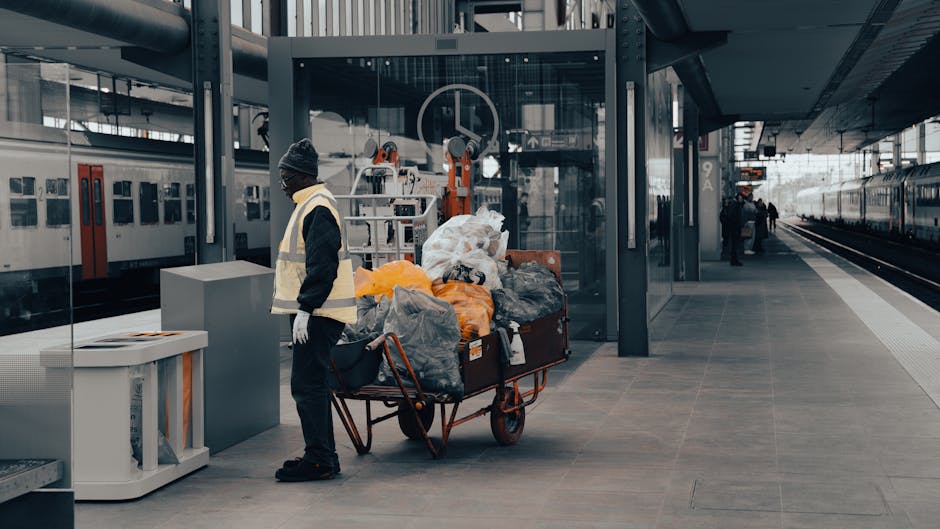
Surbiton station small furniture rubbish removal KT6: a practical guide for quick, tidy clearances
If you have a broken chair, a bulky bedside table, a sagging coffee table, or a couple of unwanted shelves sitting near Surbiton station, you are not alone. Small furniture can be oddly awkward to get rid of: too large for the bin, too heavy for one person, and just inconvenient enough to keep postponing. That is exactly where Surbiton station small furniture rubbish removal KT6 comes in. This guide explains how local small-item furniture clearance works, what to expect, what to avoid, and how to choose a sensible route that saves time without creating more hassle. It is written for real people dealing with real clutter, not for a tidy theoretical world that never existed.
Whether you are moving out of a flat, clearing a room, refreshing an office corner, or just trying to make the hallway usable again, you will find practical steps here. And yes, we will keep it straightforward.
Why Surbiton station small furniture rubbish removal KT6 matters
Small furniture feels manageable until you actually try to shift it. A chair can snag on a doorframe. A narrow side table can still be too awkward for public transport. A flat-pack chest of drawers might be light enough in theory, but in practice it is a wobbling, splintered nuisance. Around a busy transport area like Surbiton station, the need for a clean, efficient removal option is even more obvious: less lifting, less waiting around, and fewer excuses to let clutter build up.
For local residents, tenants, landlords, commuters, and small businesses in KT6, the biggest issue is usually convenience. Small furniture can quickly become dead space. It blocks a landing, makes a studio feel smaller, or sits in a garden room for weeks because nobody wants to deal with it. Truth be told, most people do not need a dramatic clearance service. They just need the right kind of removal for a small load, done properly.
It also matters from a practical housekeeping point of view. When furniture is removed promptly, you reduce trip hazards, free up storage space, and stop the "I'll sort it later" pile from spreading. That pile has a habit of multiplying. One chair becomes three items, then a box of odds and ends, then somehow an old lamp and a broken shelf. Funny how that works.
Expert summary: Small furniture removal is not really about size alone. It is about choosing a removal method that matches the item, the access, and the time you actually have. Around Surbiton station and KT6, that usually means fast, careful collection with minimal disruption.
How Surbiton station small furniture rubbish removal KT6 works
The process is usually simpler than people expect. A good clearance service will focus on three things: what needs removing, where it is located, and how much handling is involved. For small furniture, the job often includes items like stools, chairs, coffee tables, compact bookcases, small cabinets, bedside units, shoe storage, and occasional office furniture.
Here is the general flow:
- You describe the items. A quick list or a few photos usually helps. This is especially useful when the furniture is in a basement, loft, communal hallway, or upper floor flat.
- The collection is assessed. The team will consider access, volume, weight, dismantling needs, and whether the items can be recycled or need a different disposal route.
- A removal time is arranged. For small clearances, timing is often more flexible than with larger projects. Still, near a station area, parking and access can shape the plan.
- The items are taken away. Good practice is to remove the furniture carefully, protect walls and floors where needed, and leave the space swept and tidy.
- Sorting follows. Reusable pieces may be separated from recyclable materials and residual waste, depending on condition and the service provided.
Some items need a little preparation before collection. For example, removing drawers from a small cabinet can make it easier to move. Wrapping loose glass or taping doors shut is also sensible. Nothing fancy. Just enough to prevent a wobble or a scrape.
If your furniture is mixed with other clutter, the job may overlap with broader home clearance or flat clearance work. For a single room, though, a lighter touch is often all you need.
Key benefits and practical advantages
There is a reason people search for small-item rubbish removal rather than trying to solve it themselves. The main benefits are simple, but they matter.
- Less lifting stress: Even small furniture can be awkward on stairs and in tight hallways.
- Faster room recovery: A bedroom, office nook, or landing can be usable again much sooner.
- Cleaner access: No waiting for the right day to dispose of a bulky item if collection can be arranged promptly.
- Better recycling potential: A responsible service can sort materials more effectively than a rushed one-off dump.
- Less risk of damage: Doorways, walls, and lifts are easier to protect when the job is planned properly.
- Less personal hassle: You do not have to borrow a van, recruit a friend, or spend your Saturday doing a job you never wanted in the first place.
There is also a psychological benefit people rarely mention. Removing a few pieces of old furniture can make a space feel lighter immediately. A cramped room looks different once a broken chair and that half-wanted shelving unit are gone. Suddenly the room breathes a bit. Small win, but a real one.
For business users near KT6, the value is often operational. A tidy office corner, reception area, or storage room helps keep things professional. If that sounds more like your situation, it may be worth looking at office clearance or broader business waste removal support.
Who this is for and when it makes sense
This kind of service suits a pretty wide range of people. If you live or work near Surbiton station, chances are you have a use case for it at some point.
Common situations include:
- Tenants clearing a flat before moving out
- Landlords dealing with leftover furniture after a tenancy change
- Homeowners replacing a few old pieces rather than doing a full clearance
- People helping elderly relatives declutter a room or hallway
- Students and young professionals in compact homes with limited storage
- Small offices removing surplus desks, chairs, or filing units
It makes sense when the job is too small for a full-scale house clearance, but too inconvenient to handle with your own car. It also makes sense if the item is bulky, dusty, or hard to move safely. Let's face it, nobody wants to wrestle a dodgy wardrobe down a narrow staircase at 7:30 in the evening.
If the furniture is mixed with loft storage, garage clutter, or garden furniture, the better fit might be a broader clearance route such as garage clearance, loft clearance, or garden clearance.
Step-by-step guidance
If you want the process to be smooth, a little preparation goes a long way. Here is the sensible way to handle it.
- Identify everything that needs to go. Be specific. "One small bookcase, two dining chairs, and a bedside unit" is better than "some stuff".
- Check whether anything can be reused. If an item is still usable, that may influence how it is handled.
- Measure access points if the space is tight. Hallways, stair turns, door widths, and lift dimensions matter more than people expect.
- Separate furniture from general rubbish. This helps the removal team plan the right collection and sorting method.
- Remove personal items. Drawers, shelves, and hidden corners have a habit of keeping lost socks, cables, or old letters. A bit awkward if they disappear with the unit.
- Ask about what happens next. A reliable provider should be clear about handling, disposal, and recycling.
- Choose a slot that suits parking and access. Near Surbiton station, timing can matter. A quiet window can make the difference between an easy lift and an annoying wait.
There is no prize for overcomplicating it. The best jobs are usually the ones where the customer has done the basic prep and the team can move in, lift, sort, and go. Clean, calm, done.
Expert tips for better results
After years of seeing clearance jobs go smoothly or turn into a bit of a faff, a few habits stand out.
1. Put the small items together before the team arrives
If possible, group the furniture in one spot. That saves time and reduces back-and-forth through the property. It also makes it easier to check whether anything has been missed.
2. Take photos in daylight
Early morning or daytime photos are clearer than dim hallway snapshots. Weirdly enough, a blurry picture of a chair at night tells you almost nothing. Who knew?
3. Keep an eye on mixed materials
Furniture often includes wood, metal fixings, fabric, foam, glass, or plastic. Mixed materials affect sorting and recycling. Mentioning them upfront is helpful.
4. Protect shared spaces
If you live in a block near the station, communal hallways and lifts matter. A careful team should work neatly, but you can help by clearing the route and keeping doors open only when needed.
5. Plan around your day
A small clearance can be quick, but it still helps to leave a little buffer. Even 20 minutes of slack can stop a normal day turning into a rushed one.
If sustainability matters to you, it is worth asking how reusable and recyclable furniture is handled. That is where a service with clear recycling priorities can be especially useful. You may also want to review the company's approach to recycling and sustainability before booking.
Common mistakes to avoid
Most clearance problems come from rushed assumptions, not from the furniture itself. Here are the main ones.
- Leaving it until the last minute. If you need the space cleared before a move-out date, do not leave the call for the final day.
- Underestimating access issues. A small table can still be awkward in a top-floor flat with no lift.
- Mixing unrelated waste together. Building scraps, general rubbish, and furniture can need different handling.
- Assuming every item is the same. A wooden shelf, an upholstered chair, and a glass-topped table are not identical in disposal terms.
- Forgetting to remove valuables. Not glamorous advice, but important.
- Choosing a method just because it is cheap. Cheap only works if the job is properly handled. Otherwise it turns expensive later, in time or stress.
One common oversight near rail and town-centre areas is parking. It sounds dull, but it really does matter. A collection delayed by access problems can spoil an otherwise simple job. Planning it properly avoids that unnecessary friction.
Tools, resources and recommendations
You do not need specialist equipment for most small furniture removals, but a few basic tools can make life easier if you are doing the prep yourself.
- Screwdriver set: Handy for removing handles, shelving pins, or loose fittings.
- Allen keys: Commonly needed for flat-pack furniture.
- Strong tape or straps: Useful for keeping doors shut or bundling smaller pieces.
- Moving gloves: Worth having if surfaces are rough or dusty.
- Protective blankets or old sheets: Good for preventing scuffs when moving items through the property.
- Phone camera: Not a tool in the traditional sense, but photos make quoting and planning much easier.
For anyone comparing services, it can also help to review the company's pricing and quotes, payment and security, and insurance and safety information. That gives you a better sense of how the job is handled before anyone turns up at the door.
If you are sorting a larger mess and not just a couple of items, broader services like furniture clearance, furniture disposal, or even waste removal may be the more efficient fit.
Law, compliance, standards, or best practice
For UK furniture removal, the main practical point is simple: waste should be handled responsibly and taken to the appropriate disposal or recovery route. Reputable operators will usually sort items for reuse, recycling, or disposal according to condition and material type. That matters because careless disposal can create avoidable problems for homeowners and businesses alike.
If you are disposing of furniture yourself, the sensible best practice is to make sure it ends up somewhere legitimate and suitable. If a clearance service handles it, ask how they process mixed materials and whether reusable items are separated where possible. You do not need a legal lecture. You just need a provider who is not vague about what happens next.
For businesses, keeping records and using proper disposal methods is especially important. If you are clearing an office or commercial space, the right process protects your reputation as much as your floor space. In that context, a structured business waste removal approach is usually better than ad hoc dumping of old desks and chairs.
One more point, because it matters: safety. Furniture with broken edges, unstable frames, or hidden sharp hardware can injure people during lifting. Good handling practice is not overkill; it is common sense with a professional habit attached.
Options, methods, or comparison table
There are a few ways to deal with small furniture rubbish removal around Surbiton station. The right choice depends on time, access, condition of the items, and how much effort you want to spend.
| Method | Best for | Pros | Limitations |
|---|---|---|---|
| Self-removal | One or two lightweight items | Can be cheap if you already have transport | Requires lifting, vehicle space, and disposal know-how |
| Scheduled local collection | Small mixed furniture loads | Convenient and usually quicker | Needs planning around access and timing |
| Full clearance service | Several rooms or mixed clutter | Efficient for bigger jobs | May be more than you need for a simple chair-and-table job |
If you only have a single item, self-removal may seem appealing. But once stairs, parking, and disposal logistics enter the chat, the picture changes. For most people, a small professional collection is the calmer option. Not always the cheapest on paper, but often the least annoying in real life. And annoying has a cost too.
Case study or real-world example
Here is a typical local scenario. A tenant in a KT6 flat near Surbiton station needs to clear out a small bookcase, a broken desk chair, and a narrow bedside unit before the next tenancy begins. None of the items are huge. But the flat is on an upper floor, the hallway is narrow, and the moving day already feels busy.
Instead of trying to squeeze the furniture into a car or leaving it in the corner for "later", the tenant arranges a small collection. The items are grouped near the exit, photos are shared in advance, and the route is kept clear. On the day, the removal is quick because the planning was done properly. No drama, no scratched wall, no last-minute panic while someone is waiting for a key handover.
That sort of job is common. It is not grand or complicated. It is just one of those everyday tasks that becomes ten times easier when handled in a straightforward way. A simple process can save an entire evening.
Practical checklist
Use this before booking or arranging collection.
- List each furniture item clearly
- Check whether anything can be reused or donated elsewhere
- Measure doorways, stairs, and lifts if access is tight
- Remove drawers, shelves, and loose contents
- Take a couple of photos in good light
- Clear the path from room to exit
- Ask how the furniture will be sorted after collection
- Confirm the timing works with your schedule
- Review pricing, insurance, and payment details
- Make sure any fragile or sharp parts are flagged in advance
If you have ticked those off, the rest tends to feel much easier. A bit of prep now avoids a lot of faff later. Honestly, that is half the battle.
Conclusion
Surbiton station small furniture rubbish removal KT6 is really about making a small but irritating problem disappear in the least stressful way possible. When a few pieces of furniture are cluttering a room, the right solution should feel simple: clear communication, careful handling, and a tidy finish. Whether you are moving, redecorating, helping someone else, or just reclaiming space in a compact home, the key is to choose a method that suits the item and the access, not just the headline job.
Done well, small furniture removal is quick, practical, and surprisingly satisfying. You look at the cleared space afterwards and think, yes, that was worth doing. No fuss. No pile-up. Just a room that works again.
Get a free quote today and see how much you can save.
If you want to learn more about the team behind the service, visit the about us page or use the contact us page when you are ready to talk through your clearance needs.
Frequently Asked Questions
What counts as small furniture rubbish removal near Surbiton station?
It usually means removing compact or manageable furniture items such as chairs, small tables, stools, bedside units, and similar pieces that do not need a full house clearance.
Can you remove just one item?
Yes, in many cases a single item can be collected. It often depends on access, timing, and whether the item is easy to handle safely.
Do I need to move the furniture outside first?
Not always. A good removal team can usually take items from inside the property, though it helps if they are already grouped together and the route is clear.
What if the furniture is broken or partly dismantled?
That is usually fine, but it helps to mention it in advance. Broken edges, loose screws, or split panels can affect how the item is carried and disposed of.
Is small furniture removal suitable for flats near the station?
Yes. In fact, flats are one of the most common situations for this kind of service because space is tight and access can be awkward.
How long does a small collection usually take?
It varies, but small jobs are often completed quickly once the team arrives. Access, parking, and whether items need dismantling are the main factors.
Can small furniture be recycled or reused?
Sometimes, yes. It depends on the condition of the item and the materials involved. Responsible services will usually separate reusable and recyclable materials where possible.
What should I do before the team arrives?
Clear personal items out of drawers, make space around the furniture, and let the provider know about any access issues. A quick photo can also help.
Is this different from full furniture clearance?
Yes. Small furniture rubbish removal focuses on a limited number of items, while furniture clearance is better for larger volumes or mixed-room jobs.
What if I also have garage or loft clutter?
If the items are part of a bigger clean-out, a broader service such as garage clearance or loft clearance may be more efficient.
How do I know the service is being handled properly?
Look for clear information about collection, sorting, insurance, safety, and payment. If the provider explains the process in plain English, that is usually a good sign.
What is the best next step if I want the space cleared soon?
Make a short list of what needs removing, take a few photos, and ask for a quote. That usually gets the whole thing moving without delay.